 Prisijungti


Installing a heat recovery unit is an investment in cleaner air, lower heating costs, and comfort in your home. For the heat recovery system to operate efficiently, precise installation is essential—from planning the ventilation scheme to installing all components in the room.
Our team installs both mini heat recovery units and complex ventilation systems for individual homes, apartments, or commercial spaces. We operate throughout Lithuania—responsibly, according to technical requirements, and ensuring maximum efficiency.
Installation of a Heat Recovery Unit in your Space
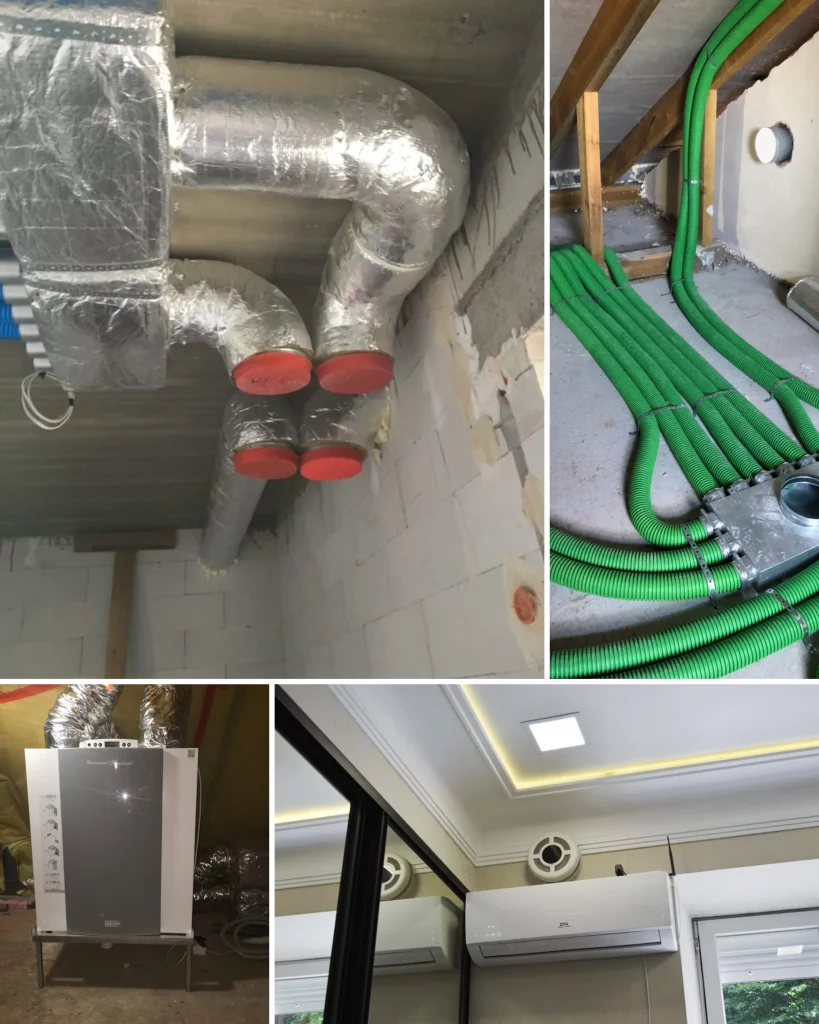
Each project requires different solutions depending on the size, purpose, and existing infrastructure of the premises. This is why the installation of a heat recovery unit is a service tailored individually for each project. We have experience working with both small and large-scale projects, ensuring that in all cases, the heat recovery system will not only be installed technically correctly but will also operate at maximum efficiency. Regardless of the type of building, we assess all technical parameters, select the appropriate equipment, and ensure that the heat recovery system operates quietly, efficiently, and contributes to a healthier microclimate in your daily environment.
We apply heat recovery solutions in the following spaces:
- In apartments and older buildings, where we often install compact mini heat recovery units that do not require a duct system.
- In new or renovated homes, where a central heat recovery system with a duct network is installed.
- In offices and commercial premises, where higher performance heat recovery units and smart management solutions are needed.
How is the Installation of Heat Recovery Carried out?
- The first stage, which is important to implement before installing heat recovery, is the ventilation system project, which allows for the planning of optimal duct routes, air supply and extraction points, and selecting the appropriate heat recovery unit.
- Installation of the heat recovery unit and duct network according to the project.
- Ensuring proper placement and sealing of the device, connecting wires.
- Vacuuming and system testing are performed.
- Commissioning work is carried out, and the operation of the device is checked.
- The client is provided with a detailed consultation on how the heat recovery unit should be used and maintained.
Frequently Asked Questions
The cost of installing a heat recovery unit depends on the type of device chosen (standard or mini), the complexity of the building, the amount of ductwork, the materials needed, and the overall scope of the system. The most accurate price can be provided after evaluating the premises and the ventilation system project.
The installation of a mini heat recovery unit is usually carried out for a single room or small spaces where it is not possible to install a full-fledged ducted heat recovery system. Installing a mini heat recovery unit requires less invasive work, and the device itself is compact. Meanwhile, a standard system is usually ducted throughout the entire dwelling.
No. A mini heat recovery unit is designed for a specific room (e.g., bedroom, study, or living room). To ensure full ventilation of the entire house or apartment, it is recommended to choose a central heat recovery system with a duct network.
Yes, a quality heat recovery unit operates efficiently even during the winter season. It recovers heat from the exhaust air, helping to reduce heat loss even on colder days. However, it is important that the unit has a heat recovery function and is properly insulated.
The installation of a heat recovery unit in an apartment depends on the chosen solution—whether only a mini heat recovery unit will be installed or a full system with ducts.
A mini heat recovery unit is usually installed on an external wall: a hole is drilled for air circulation, the unit itself is installed, and electrical wiring is connected.
When planning to install a system that ventilates the entire dwelling, a ventilation system project is first prepared. It specifies air supply and extraction points, duct routes, and the location of the device. When starting installation work, drilling and duct routing are carried out, diffuser openings, air supply, and extraction channels are installed. Finally, the heat recovery unit is connected, and the system is tested.
We recommend planning the installation of a heat recovery unit before carrying out interior finishing. This way, ducts can be easily routed, hidden in ceilings or walls, and the entire system can be aesthetically integrated. If installation is carried out after finishing, more adjustments may be needed.
Yes, both mini heat recovery units and centralized systems can be installed in apartment buildings. However, before carrying out installation work, it is important to assess whether it is possible to drill external walls and whether resident consent is required (especially if the appearance of the building facade changes).
A permit is required in cases where the installation of a heat recovery unit involves drilling the building facade, routing ducts outside, or other work that alters the building’s exterior appearance. If you live in an apartment building, joint owner consent is often required, as external walls are considered common property. If the building is a cultural heritage site, additional permits from the Cultural Heritage Department are required. To avoid complications, it is recommended to check the need for permits in advance—if necessary, we will help you do so.
Yes—in such cases, mini heat recovery units are installed, which do not require a complex duct system. This is a simpler and faster alternative to a full system, but at the same time, a single mini heat recovery unit can only be installed for one space (i.e., room)—if there is a need to introduce ventilation solutions throughout the dwelling, either several mini heat recovery units or a comprehensive heat recovery system will be required.
A heat recovery unit is designed for air circulation and fresh air supply, but unlike an air conditioner, it does not cool the air. If you want to maintain a comfortable temperature in the space, we recommend integrating an air conditioner as well. Although heat recovery complements heating and cooling systems well, it does not replace them.
Yes, heat recovery operates successfully all year round. In summer, it not only supplies fresh air but also helps remove heat and excess moisture from the premises. This is especially useful at night when the outdoor air is cooler than inside—thus, a slightly fresher microclimate can be maintained even without an air conditioner.
Do You Have any Unanswered Questions?
Are you considering installing a heat pump in your home or looking for a reliable solution for a renovated dwelling? Or are you interested in what support options are available to you? Contact our team—we will help assess your situation, answer all your questions, and provide a clear, individual offer.
Kodėl verta rinktis mus?